Project: Erasmus+ “Guiding the Guide”
Date: 25 and 26 August 2025. year
Place: Heppenheim, Germany
Organizer/host: Starkenburg Gymnasium Heppenheim (Germany)
Partners:
• Starkenburg Gymnasium Heppenheim (Germany) – coordinator
• OU Dr. Vladimir Polezinoski (North Macedonia)
• Association for the education of youth and adults – YAEDA (Serbia)
Objectives of the meeting
The main objectives of TPM were:
• Exchange of experiences and evaluation of project results so far.
• Final discussion and adaptation of the content of the Pan-European handbook for teachers.
• Planning the final version of the manual (layout, translations, deadlines).
• Defining dissemination activities and multiplier events.
• Agreement on the final evaluation and preparation for the final report.
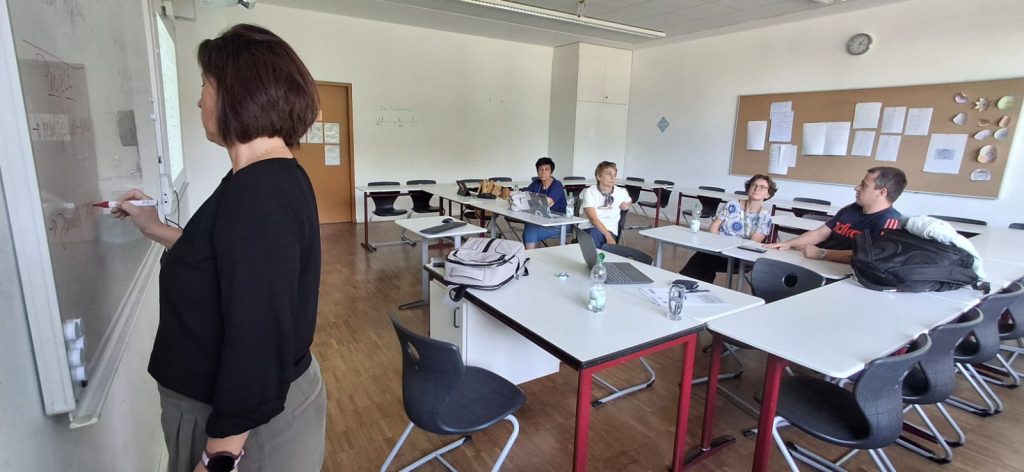
Work during the meeting
Day 1 – Monday
– Review of previous activities
• Nov–Dec 2024: conducted needs analysis and resource collection (Padlet).
• Jan–Feb 2025: developed uniform scenario-template (Serbia); created ~10 scenarios per thematic area.
• February 2025: online meeting to validate the scenario and test agreement.
• March–June 2025: piloting scenarios in schools in all three countries; evaluation conducted through Google Forms, results tracked through Google Sheets.
• More than 70% of scenarios tested, which ensured validation. The analysis showed significant applicability and readiness of teachers
– Report and evaluation on piloting scenarios
A) Classroom Management
• Positive: scenarios are realistic, clearly structured, led to improvement of student behavior.
• Suggestions: introduce more detailed student profiles; involve parents in at least one scenario.
• General Observations: Teachers evaluated 10 classroom management scenarios. The feedback highlights that scenarios are clearly structured, realistic, and offer applicable strategies for classroom challenges. Teachers particularly appreciated the inclusion of concrete actions and flexibility in adapting scenarios to different school environments.
• Strengths: Scenarios reflect real-life situations. Teachers noted improved student behavior after applying some strategies. Clear guidance supports both novice and experienced educators.
• Suggestions for Improvement: A few respondents suggested providing more detailed student profiles. One scenario could include parental involvement as a factor.
B) Inclusion and Diversity
• Positive: high relevance; activities like Human Bingo and Cultural Fair increased students’ empathy and participation.
• Suggestions: add additional materials and questions for reflection after the activity.
• General Observations: This section received very positive feedback regarding the relevance and inclusiveness of the scenarios. Teachers tested scenarios dealing with cultural differences, learning styles, gender stereotypes, and social inclusion. The forms show that most scenarios were rated as engaging, valuable, and practically applicable.
• Strengths: Empowers students to reflect on diversity and inclusion. Creative activities like Human Bingo and Cultural Fair were highly appreciated. Teachers noted greater student participation and empathy.
• Suggestions for Improvement: A few teachers requested more materials for implementation. Suggestion to add debriefing questions for students after activities.
C) Academic Success
• Positive: scenarios about motivation, self-confidence, time management. 80% of teachers rated it as useful.
• Suggestions: enrich the scenarios with examples of follow-up activities and digital tools.
• General Observations: Scenarios in this section address motivation, self-esteem, peer pressure, and time management. Teachers found them useful, especially for supporting struggling or demotivated students. Evaluation showed that over 80% of respondents found the scenarios beneficial for their work.
• Strengths: Scenarios are adaptable across age groups. Many teachers used the activities for group work or class discussion. Helps students identify academic challenges and set personal goals.
• Suggestions for Improvement: Include more examples of follow-up activities. Some teachers would like additional digital tools suggested in the scenarios.
Conclusion of the evaluation: The Toolkit was evaluated as useful, practical and applicable in different school contexts.
Across all three themes:
– The piloting phase confirmed that the toolkit is usable, well-structured, and impactful.
– Teachers expressed interest in continuing to use the scenarios even after the project ends.
– Approximately 70% of all scenarios were tested, which is sufficient for validation.
– Evaluation was conducted via Google Forms, with responses automatically collected and analyzed. Teachers marked completed scenarios in a shared tracking table, which helped monitor piloting progress.
Day 2 – Tuesday
– Final settings of the toolkit – harmonization of language, format, design, addition of teaching materials.
At the meeting, we agreed on the colors of the toolkit. Orange will predominate, and the additional two ostriches will be purple and red. We also adopted the conceptual design solution of the toolkit, taking into account transparency, aesthetic elements, comprehensibility and content structure. Germany and the North Macedonian School accepted the obligation to write the introduction for the manual, and the Serbian organization to do the design of the manual and prepare it for the printed and online version.
– Planning the final version – defined timeline for graphic design, proofreading and possible translations.
The English version of the Toolkit is expected to be ready on November 1st, and by January 1st, each delegation should translate the manual into their own language and proofread the content.
– Planning the next meeting in Serbia
The dates for the next meeting in Pozarevac have been set for January 12, 13, and 14.
Extracurricular activities
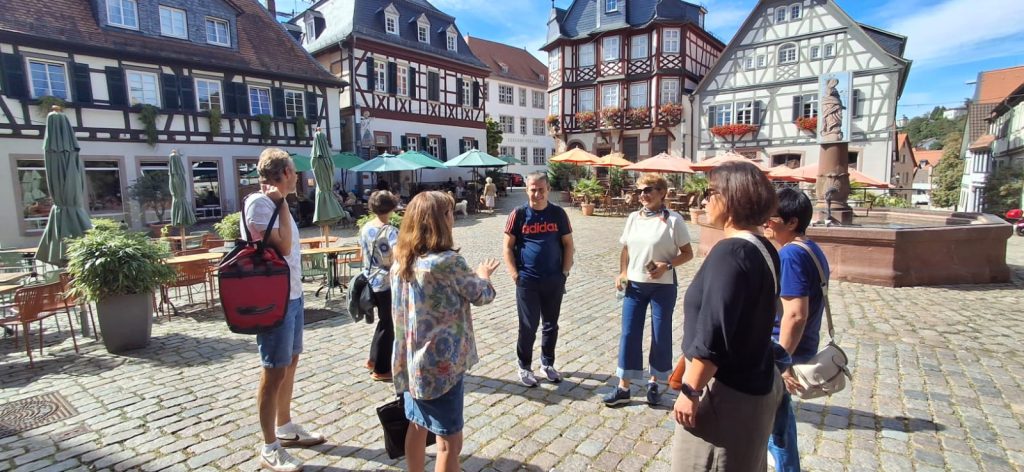
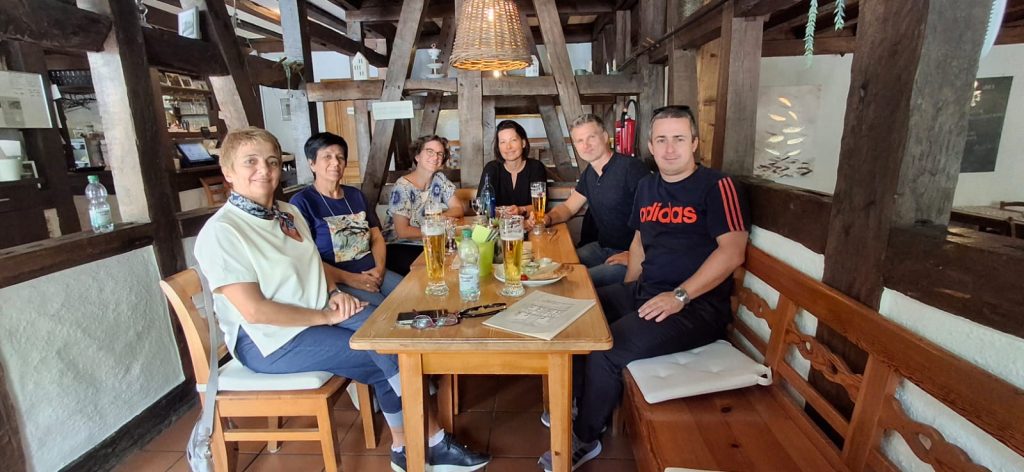
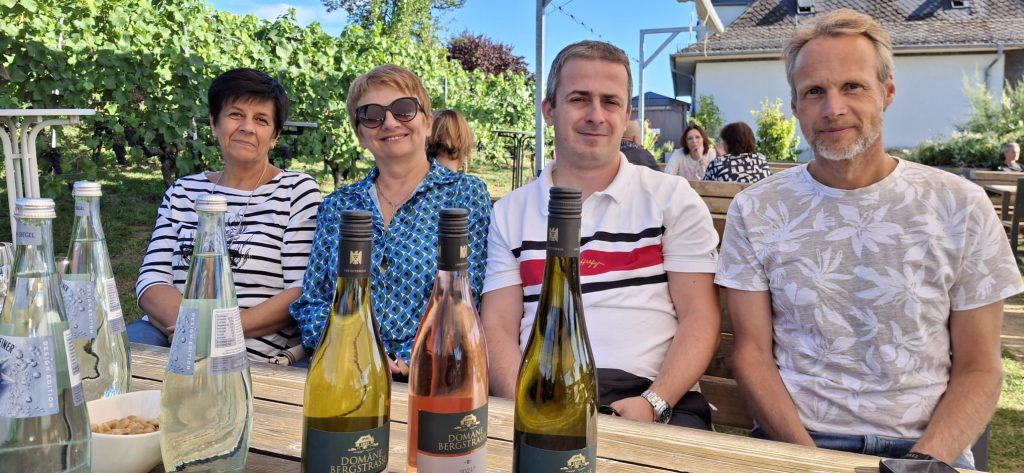
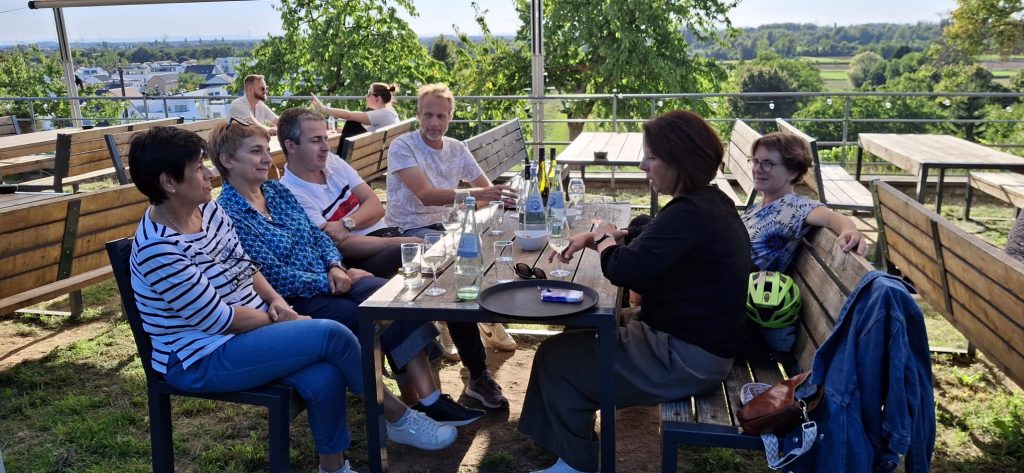
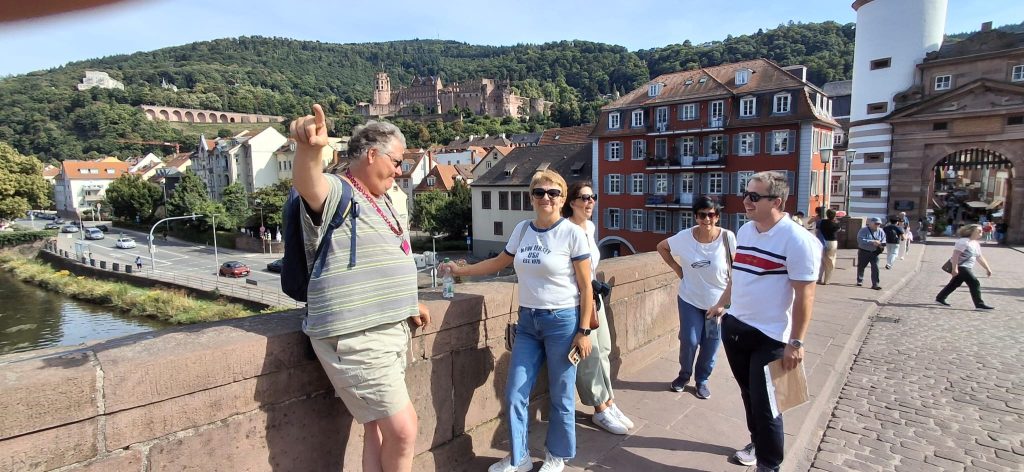
The friendly hosts showed us around the school, in particular they introduced us to their student parliament and the way it is organized in German schools. After the meeting, they took us for a walk through the city, where we had the opportunity to learn about the cultural, historical, architectural and geographical peculiarities of this German city.
Evaluation of the meeting
The participants emphasized that the meeting was well organized, productive and contributed to the finalization of details. It was agreed that the implementation will be regularly monitored through online meetings and shared documents.
Closing message:
The meeting in Heppenheim confirmed that the project is on the right track. The pilot phase successfully validated the scenarios, and the partners harmonized all key elements for the final version of the manual. The next period focuses on the finalization, dissemination and sustainability of the project results.
Extracurricular activities
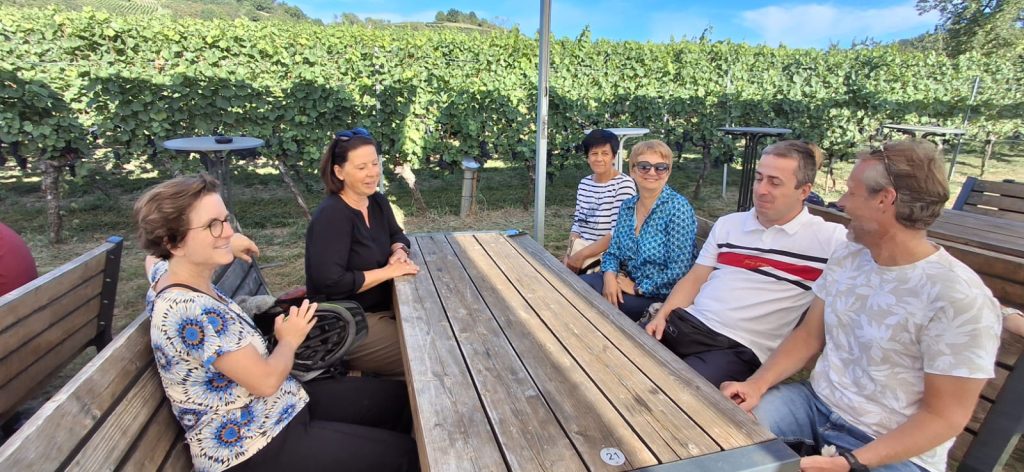
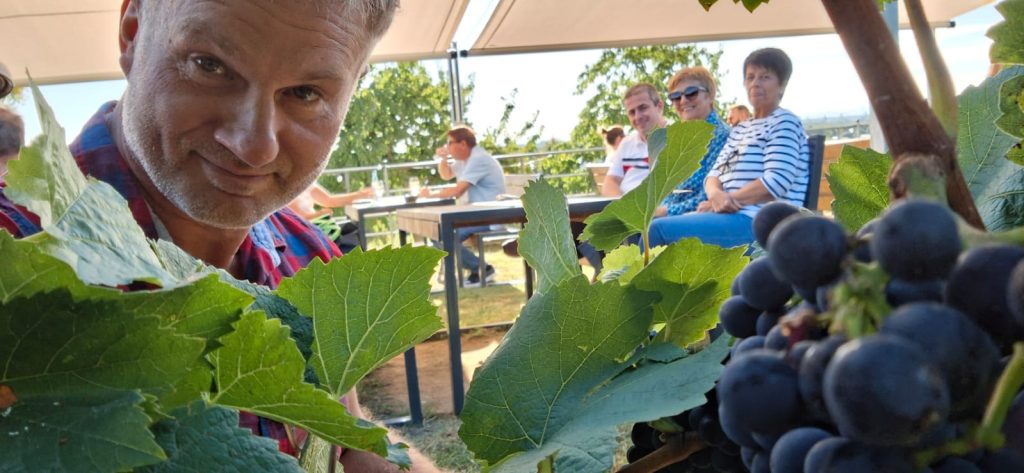
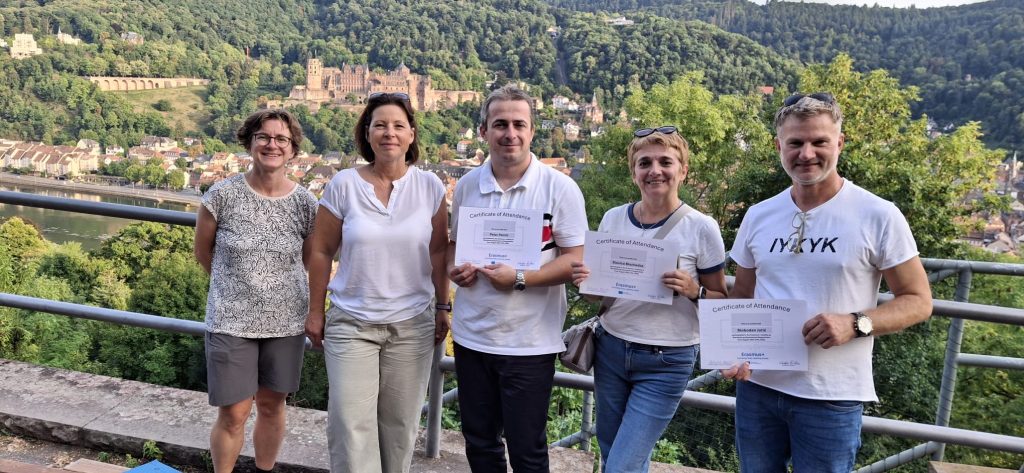
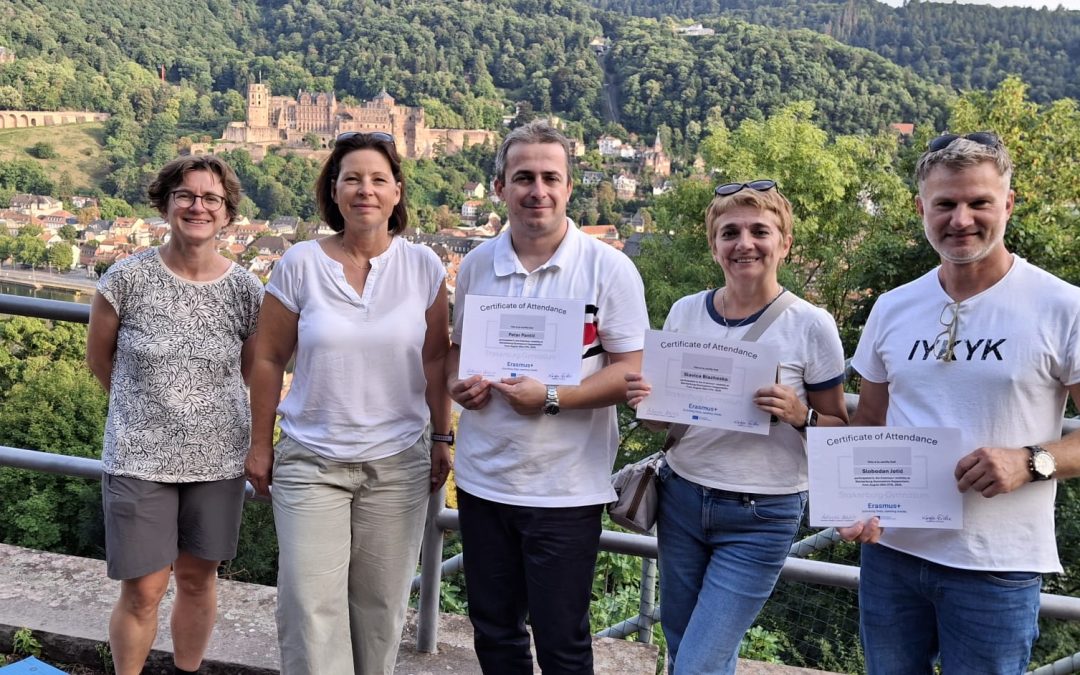
We had the special honor of receiving certificates of participation on the hill above the city of Heppenheim, which our hosts took us to on the second day of our stay. This famous romantic university place provided us with a unique tourist and cultural experience and deepened our knowledge about the history, architecture and gastronomy of this part of Germany.