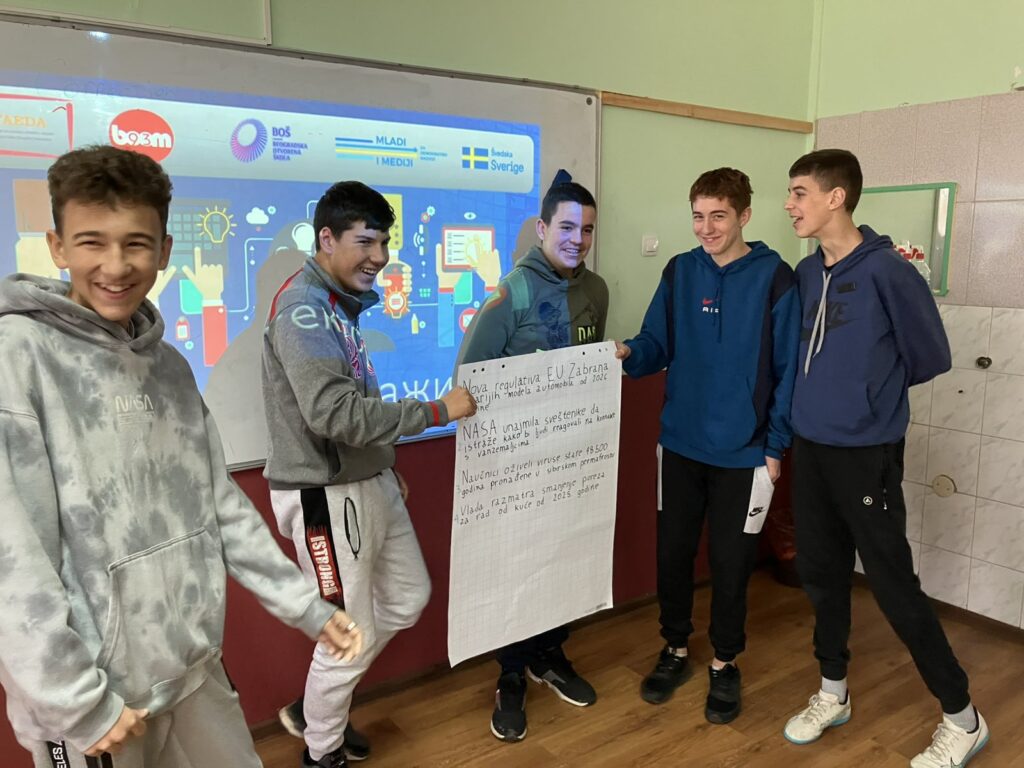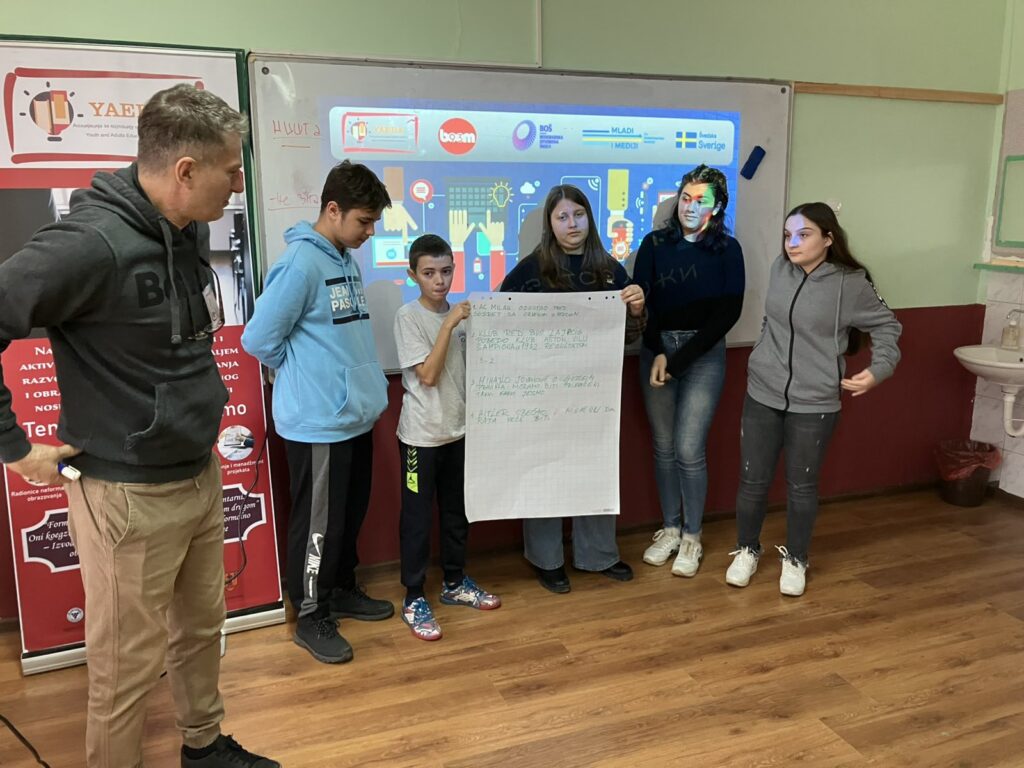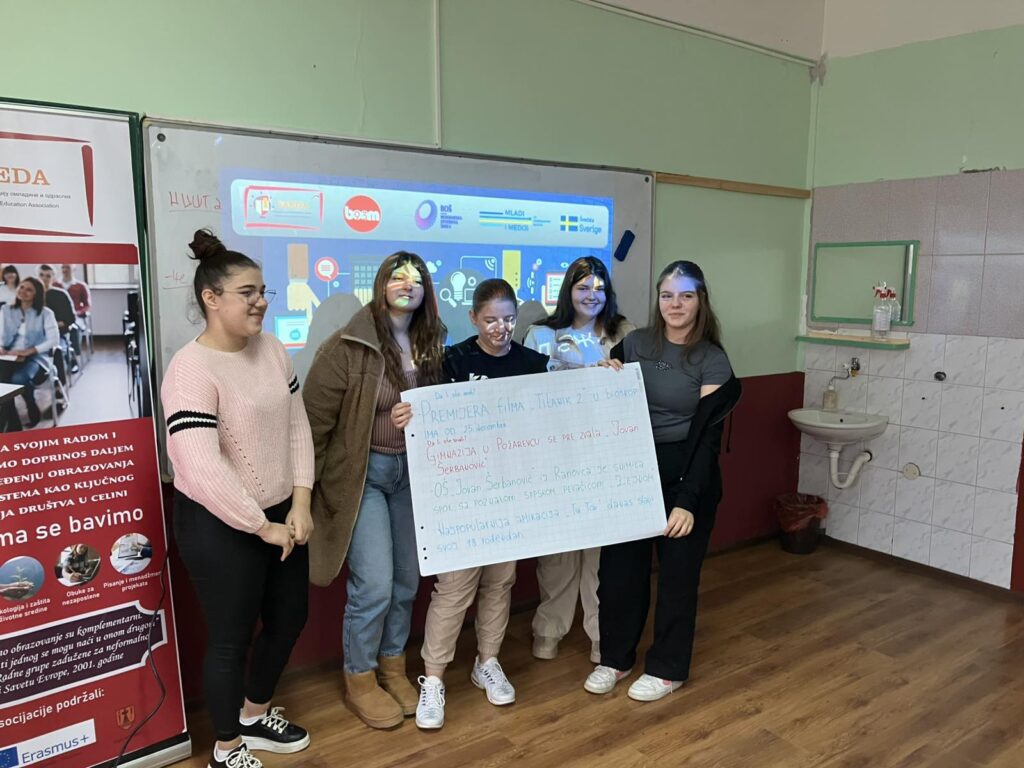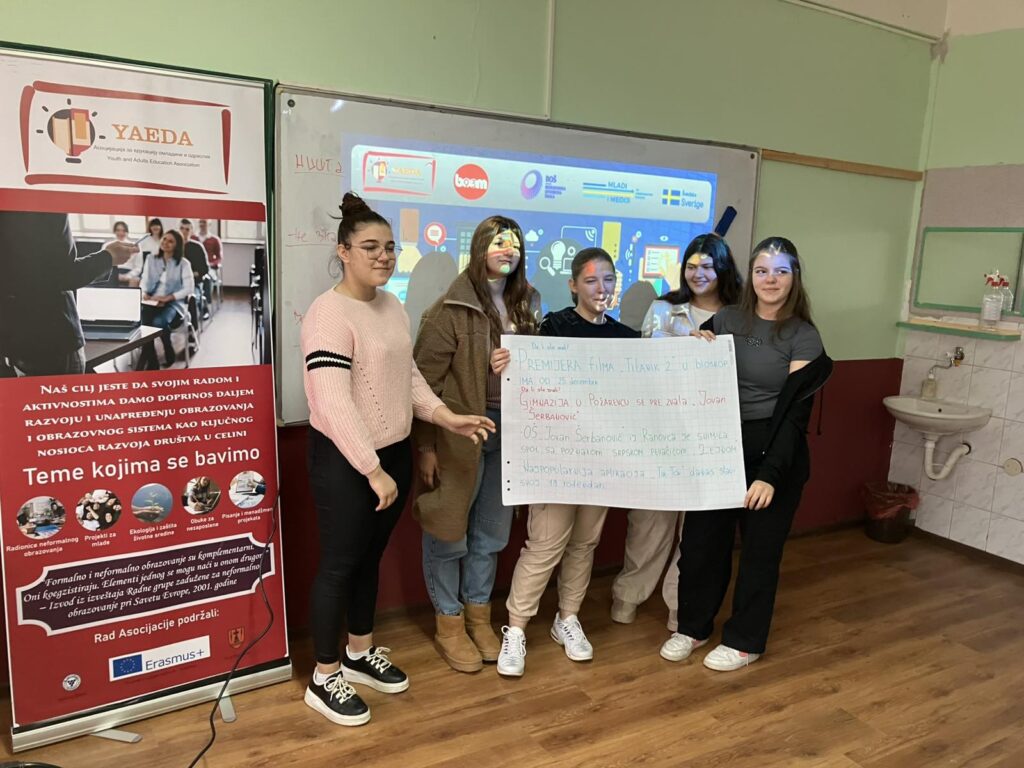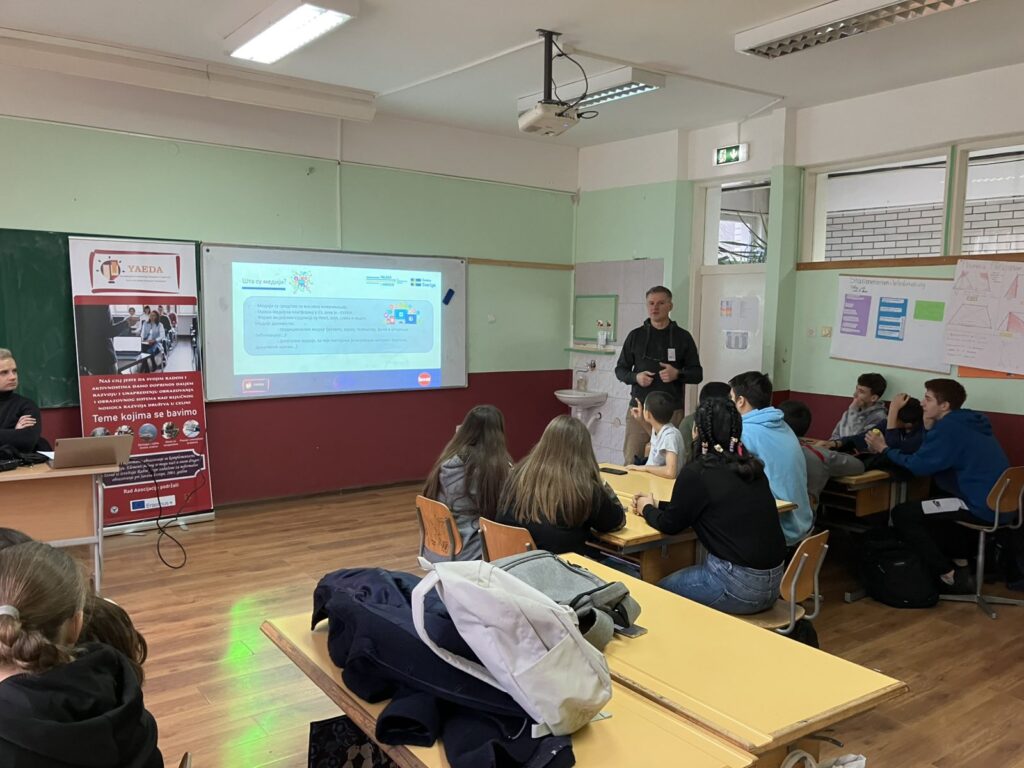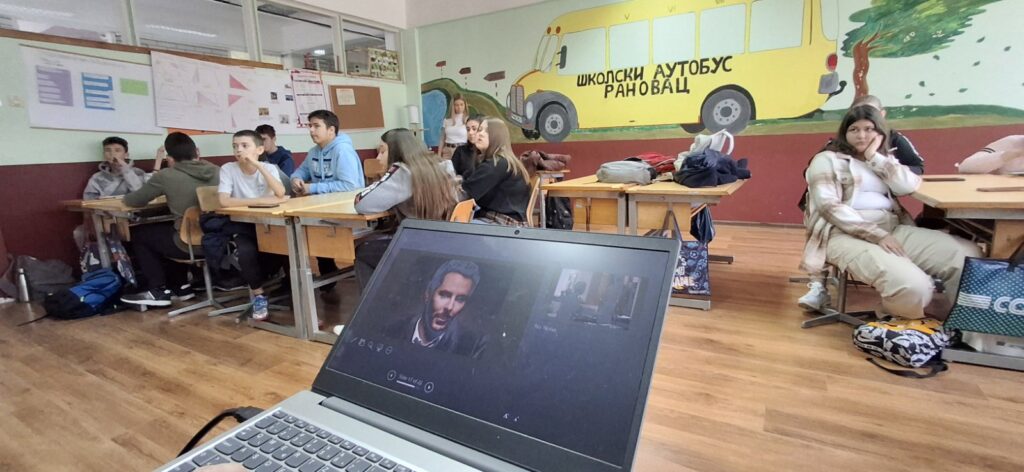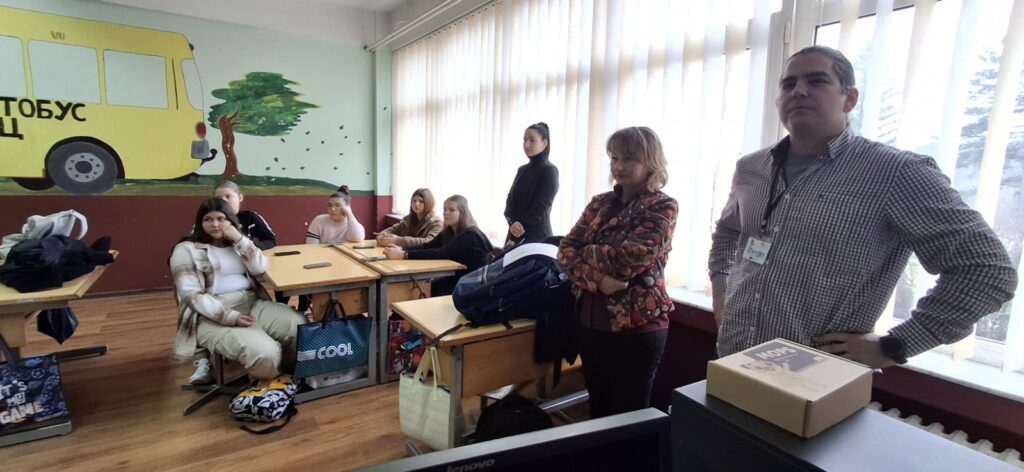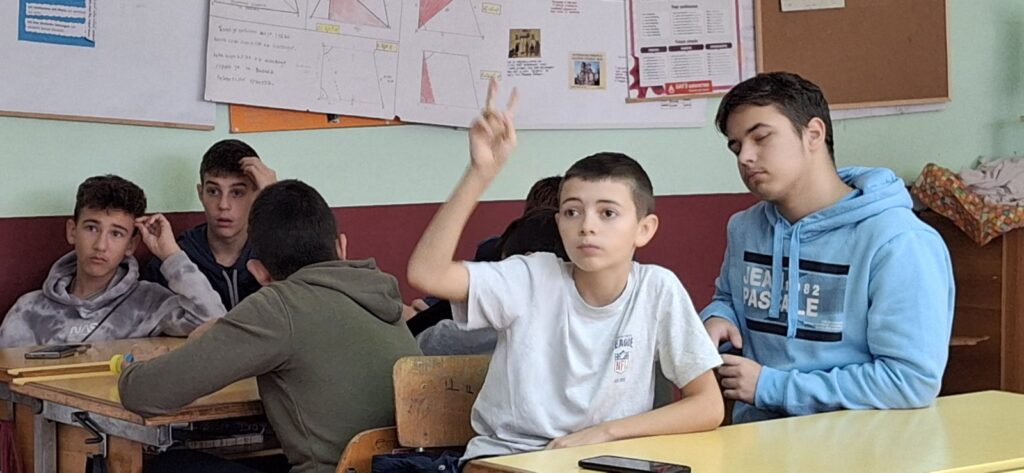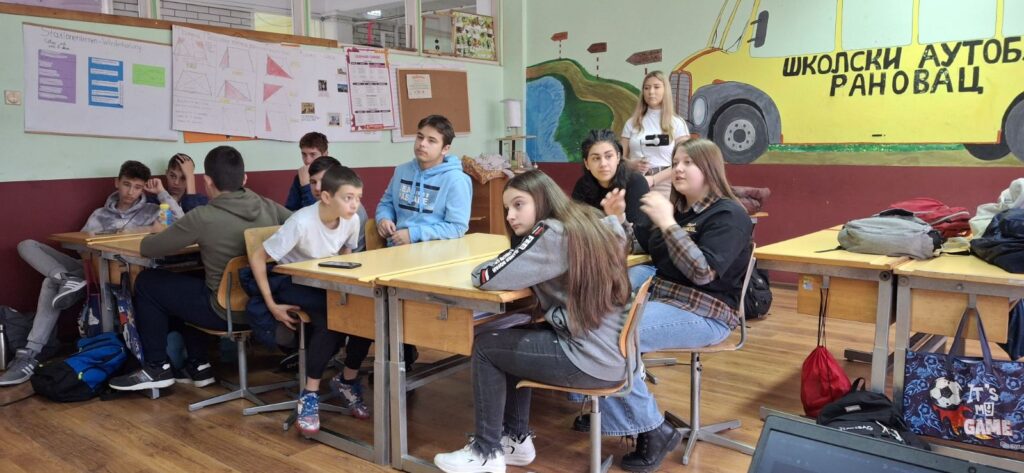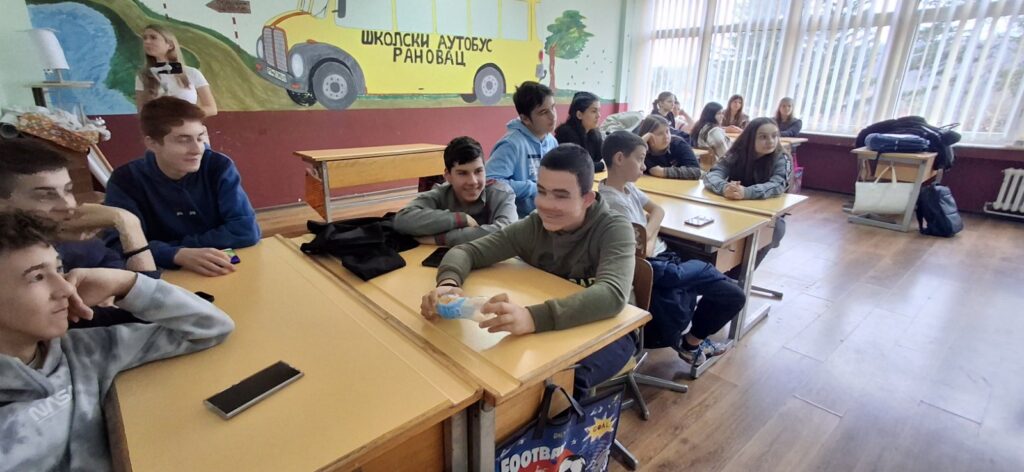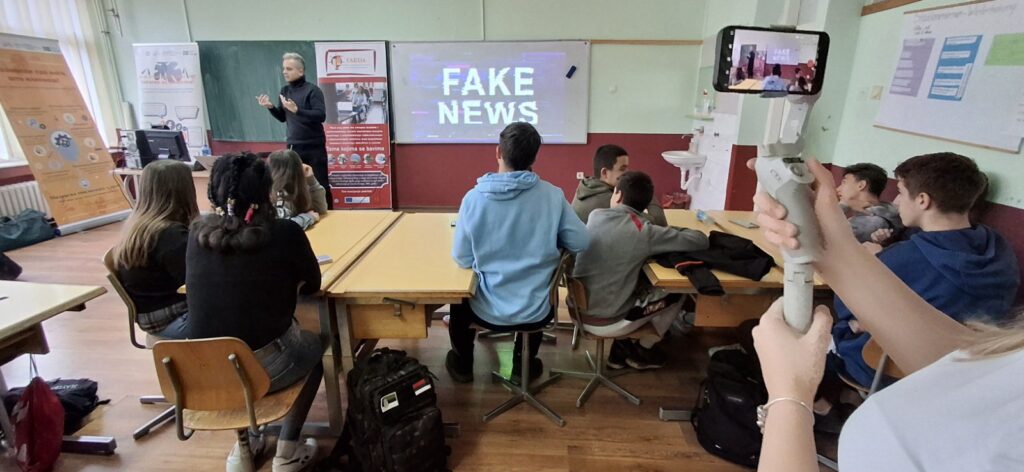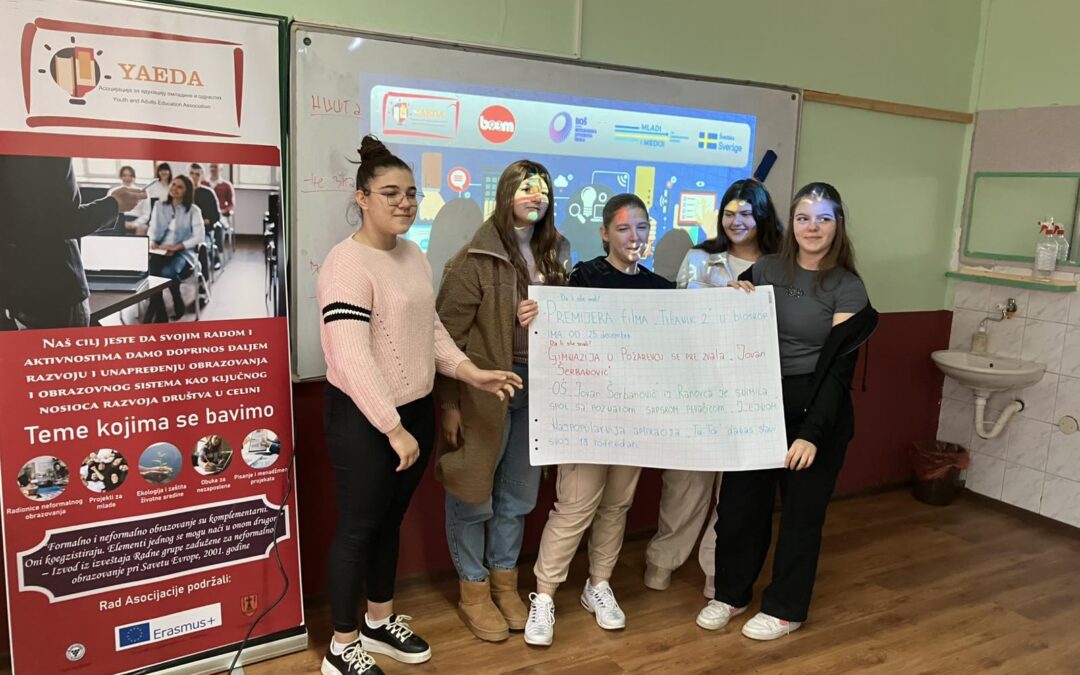
A workshop on the topic of media literacy was held at the “Jovan Šerbanović” Elementary School in Ranovac, within the “Lie Detector” project. This project is jointly implemented by the Association for the Education of Youth and Adults Požarevac and Boom 93, as part of the “Youth and Democratic Development” project, which is implemented in partnership with the Belgrade Open School and with the support of Sweden. The workshop gathered 15 students, and the first part was focused on understanding the basic concepts of media and their function.
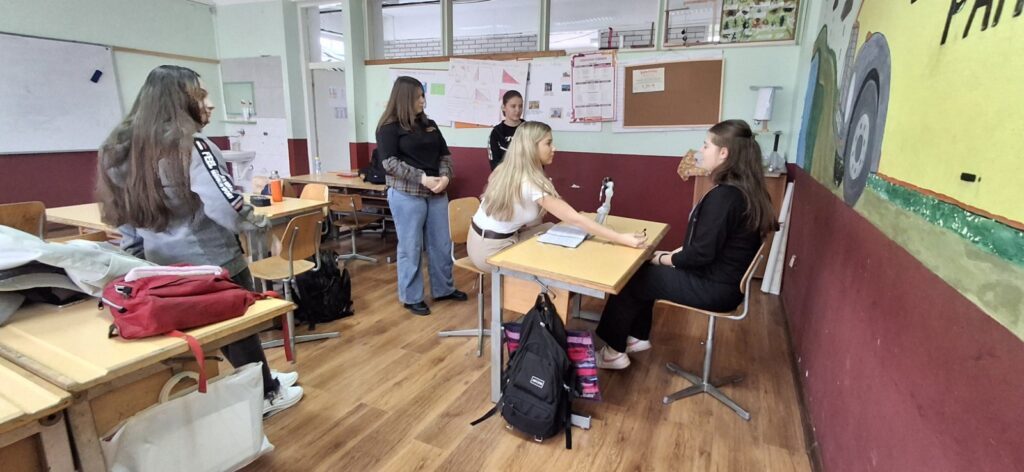
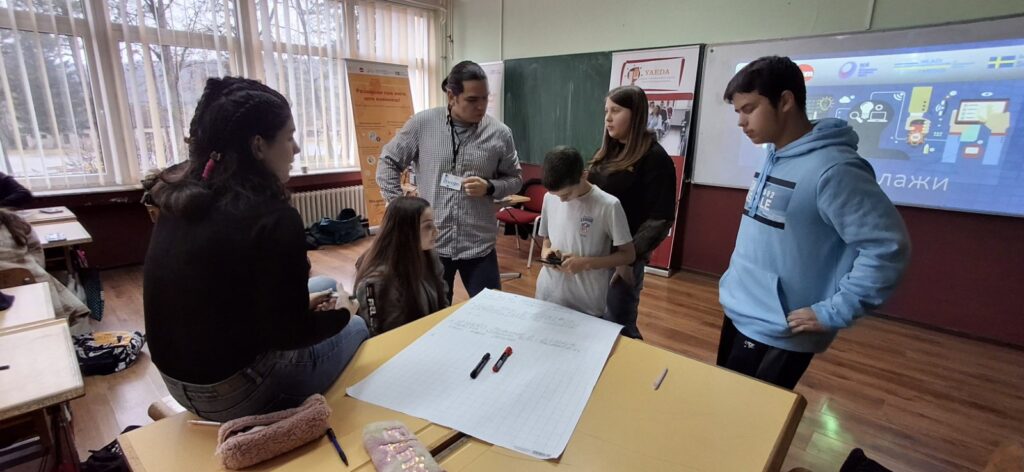
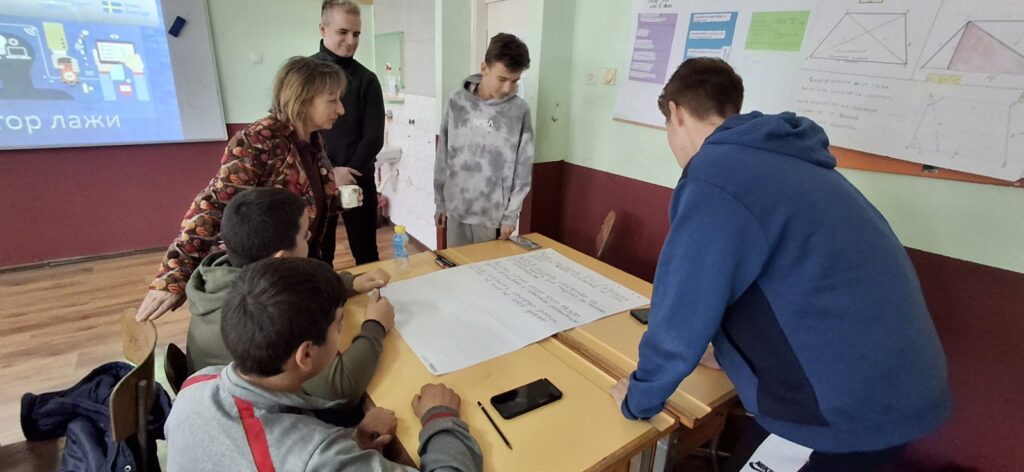
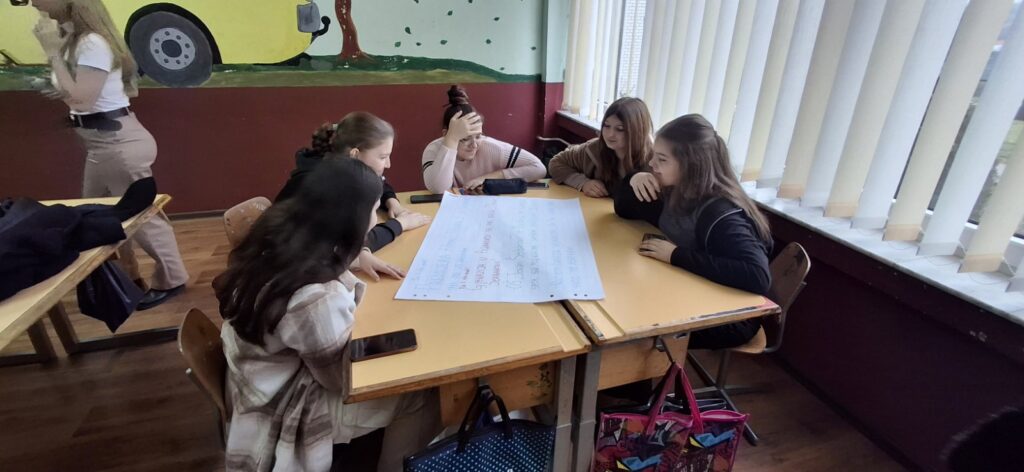
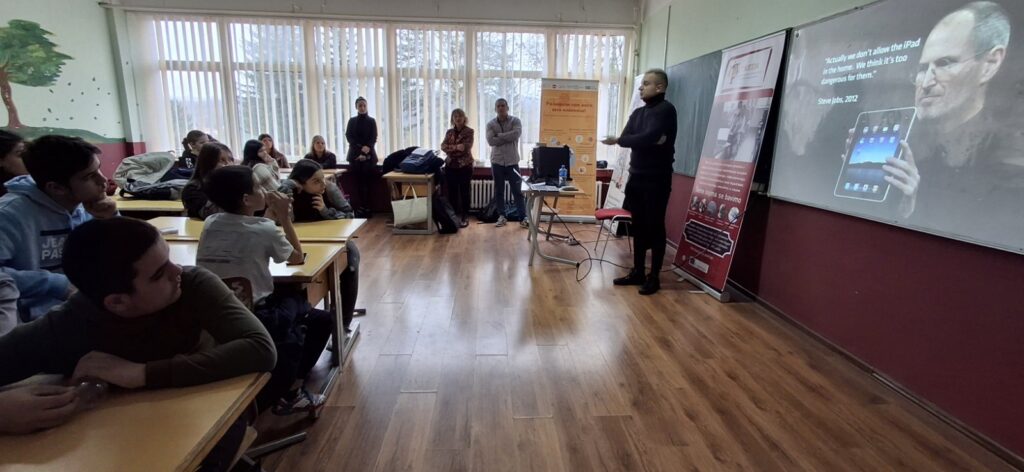
Slobodan Jotić, a teacher of Serbian language and literature at Elementary School “Sveti Sava” in Požarevac, talked to the students about the types of media and their role, as well as the importance of media literacy. A special segment was devoted to the phenomenon of fake news. Through concrete examples, students learned how to recognize manipulative content. Marko Tadić, an expert in social networks, spoke about the large amount of information from social networks, explaining the concept of algorithm and the way in which the content we consume affects our thinking. In parallel with the work with the students, a training session was held for teachers, which was led by Živojin Ivković, a history teacher at the Elementary School “Kralj Aleksandar I” and the Požarevac gymnasium. Teachers were presented with practical tools and materials for processing the topic of media literacy within regular classes. In the final part of the workshop, students worked in teams. Their task was to come up with several examples of true and false news, which they later presented to the other teams. The students then analyzed the presented news and, applying the acquired knowledge, decided which were true and which were false. This part was particularly dynamic and aroused the great interest of the participants.
Most of the students pointed out that the most interesting part of the workshop was the one in which they themselves came up with true and false news. We spoke with seventh and eighth grade students – Mihajlo Petrović, Anastasija Marković, Nikolina Ivanović and Sara Stanković. We asked them which part of the workshop was the most interesting for them, how they plan to check the accuracy of information from the media in the future, how they understood the algorithms so far, what kind of content attracts their attention the most and how they think they can help their peers understand the media better. When asked how they would check whether any information is true in the future, they stated that they would use multiple sources to search, while some added that they would consult with trusted persons. When it came to content that caught their attention, students noted that algorithms often directed their attention to topics such as language learning, dance, and science facts. As for how they can help their peers better understand media and information, students suggested always checking information from multiple sources. In situations where they are not sure, they recommended seeking help from older people or teachers at school.
We also spoke with Marija Marković, a professional assistant at the Elementary School “Jovan Šerbanović” in Ranovac, as well as with Sandra Antić, the school’s librarian, who also teaches civic education and intercultural learning to eighth-grade students. See their answers in the VIDEO. This media content was created within the project “Youth and media for democratic development” which Boom93 implements in partnership with the Belgrade Open School and with the support of Sweden. The views and opinions of the authors expressed in this media content do not necessarily represent the opinion of the partners and donors.
text & photo: Andjela Stepanovic
source: BOOM93