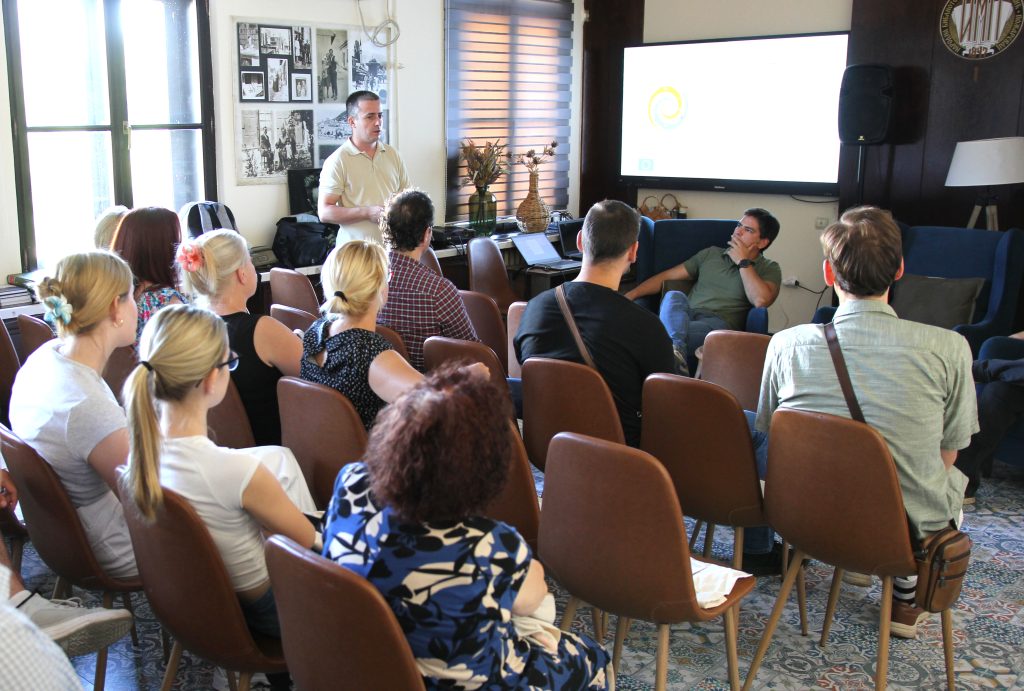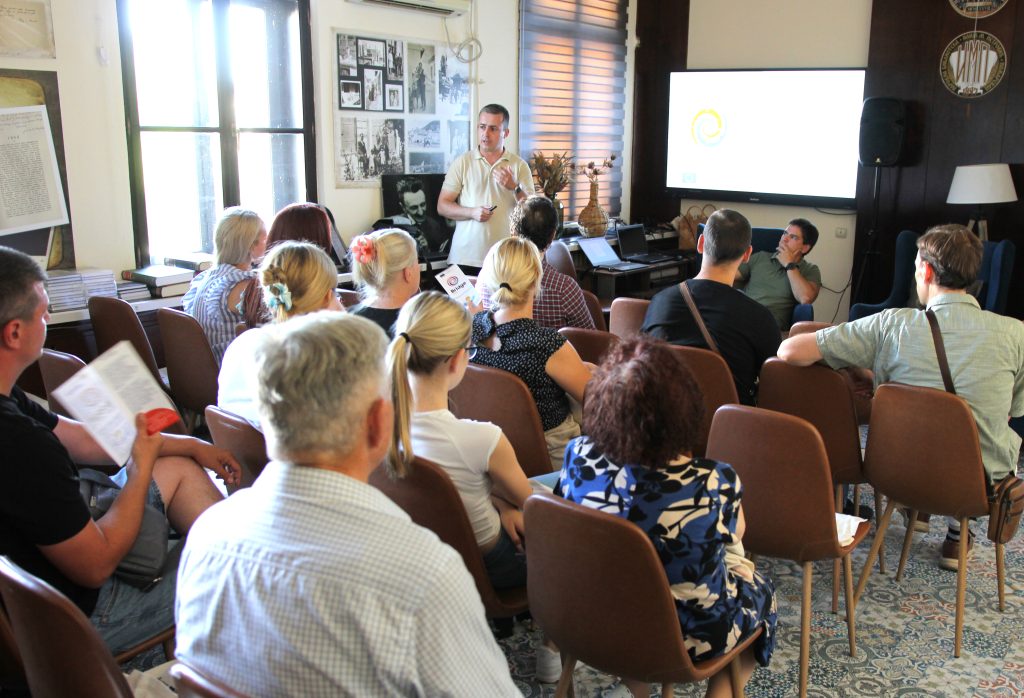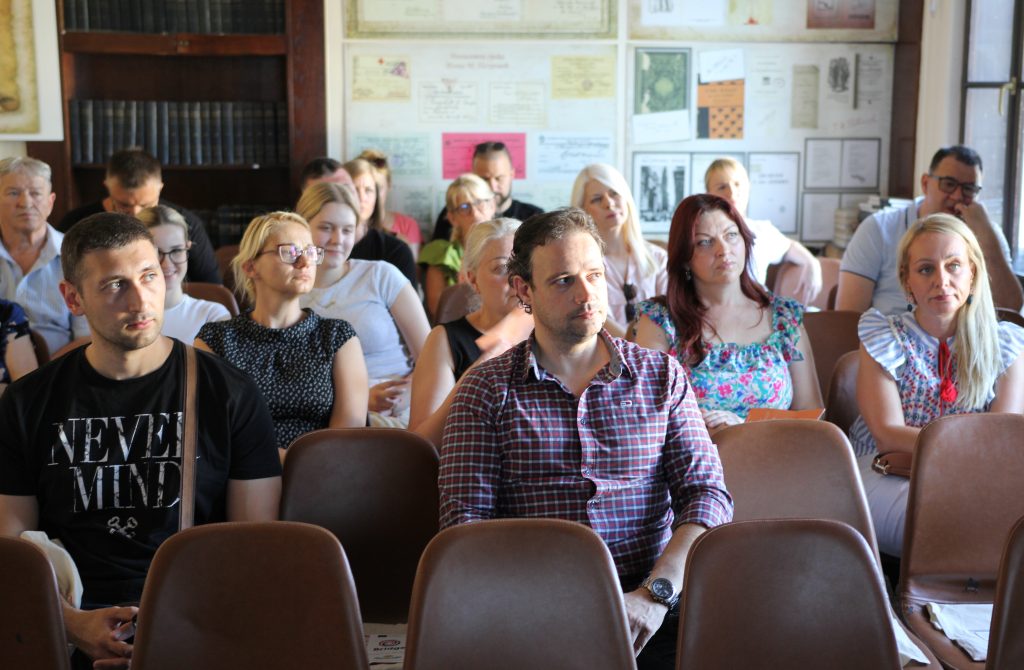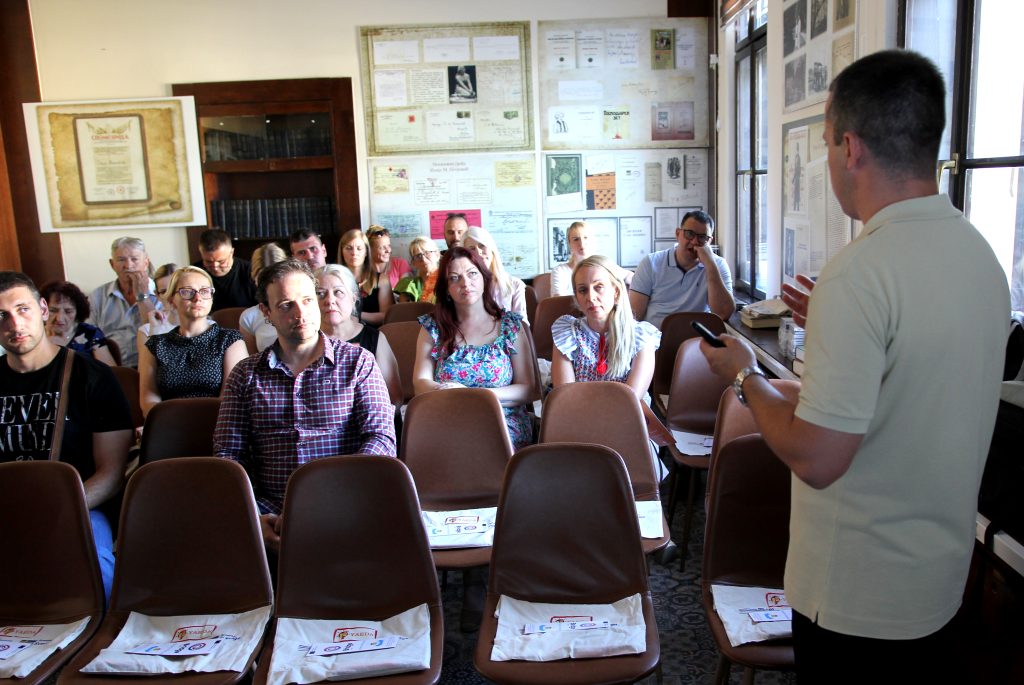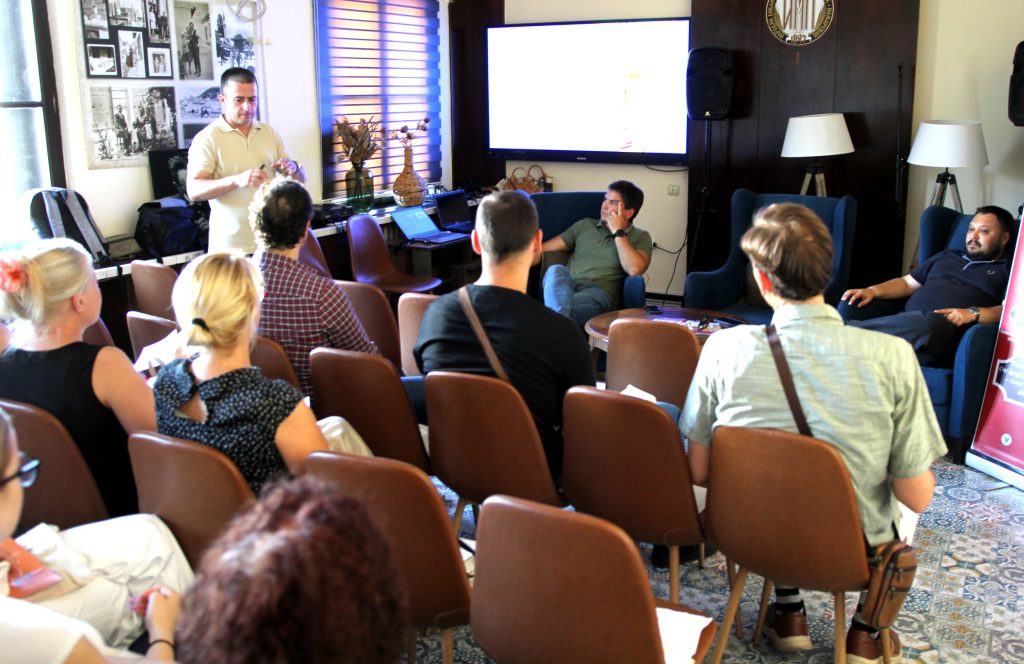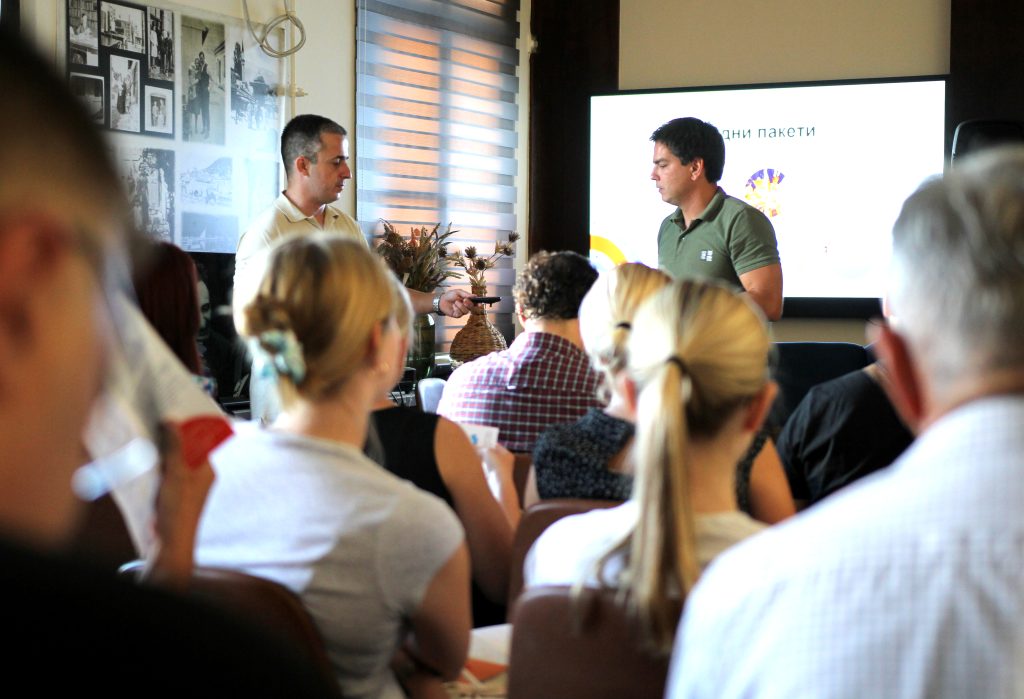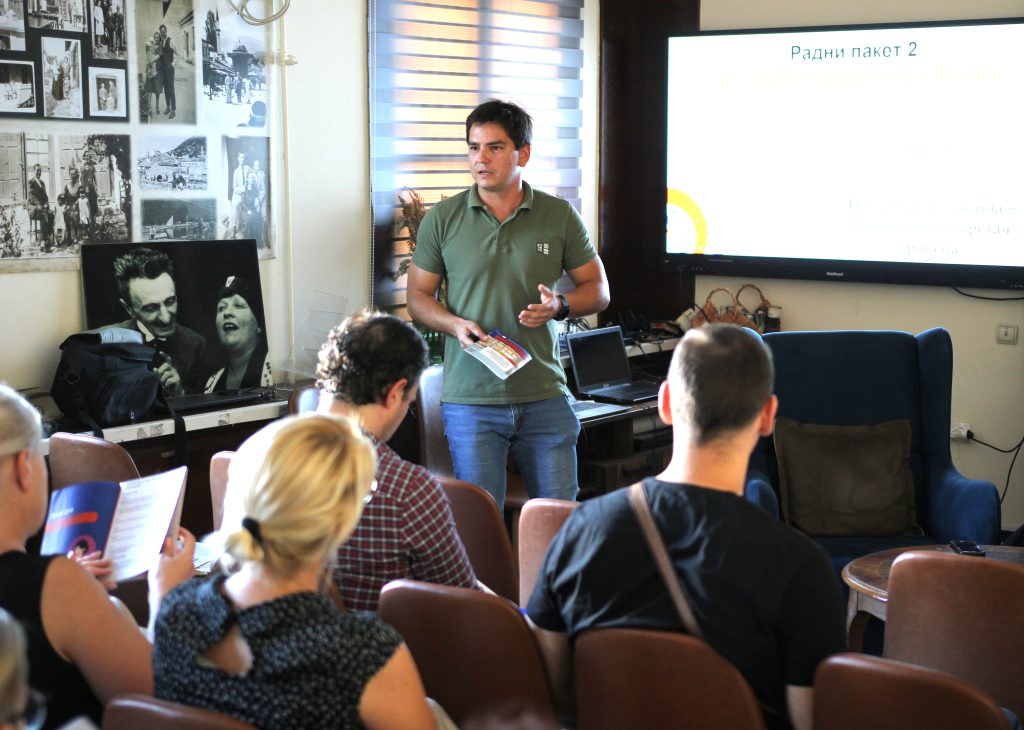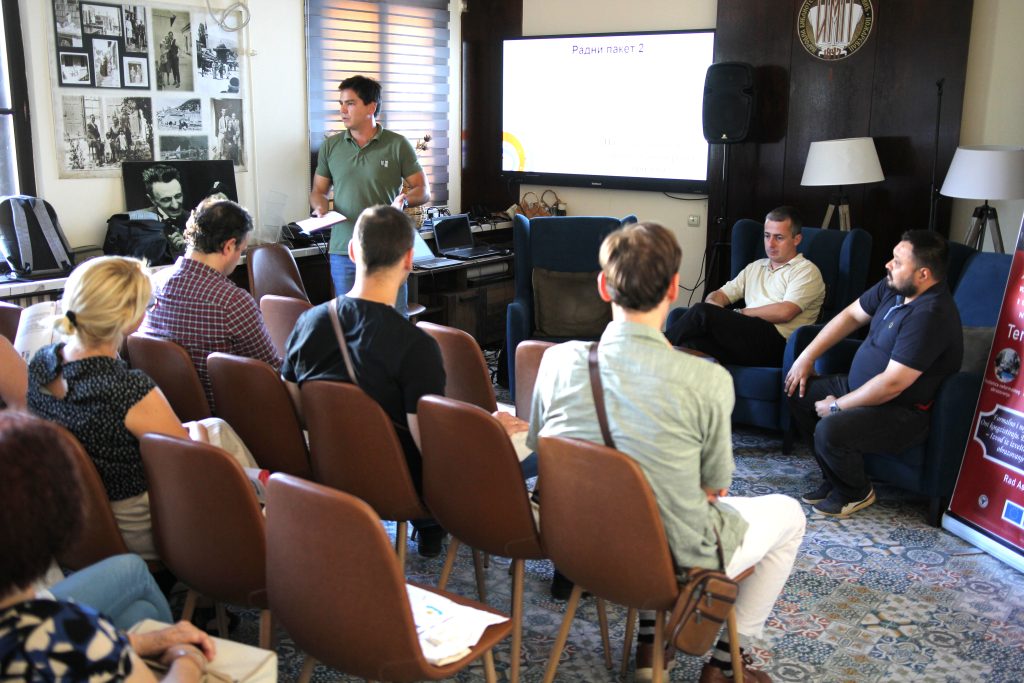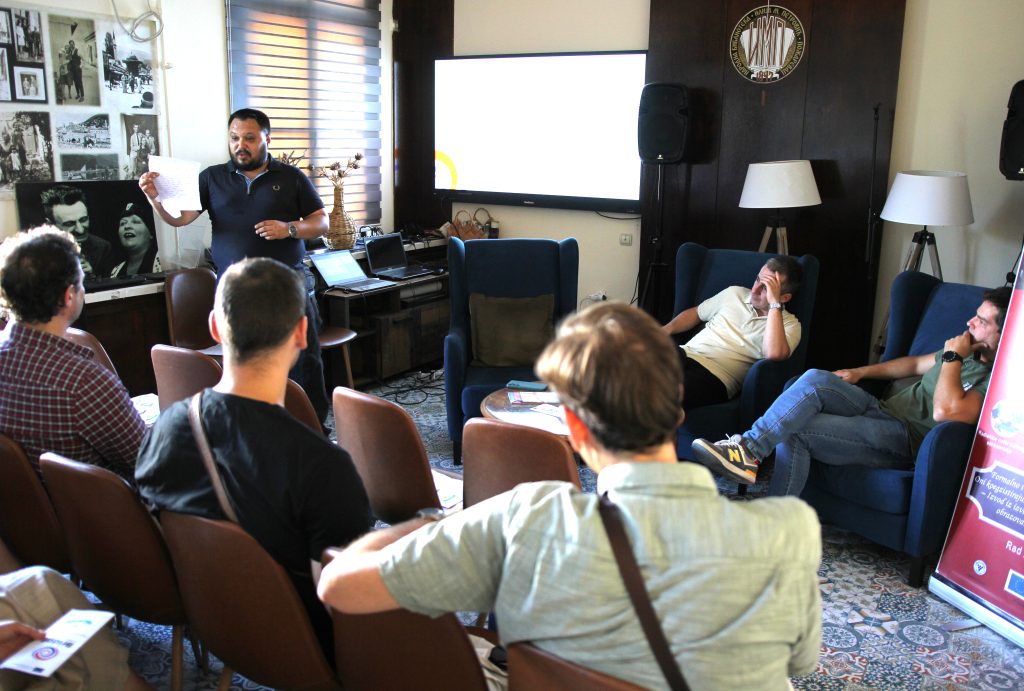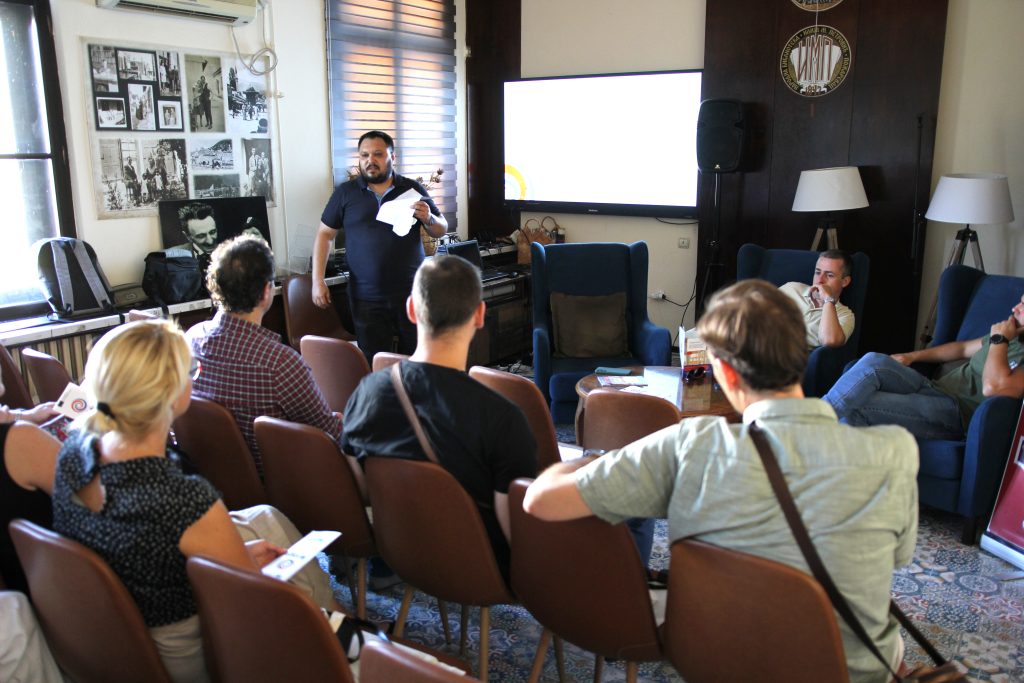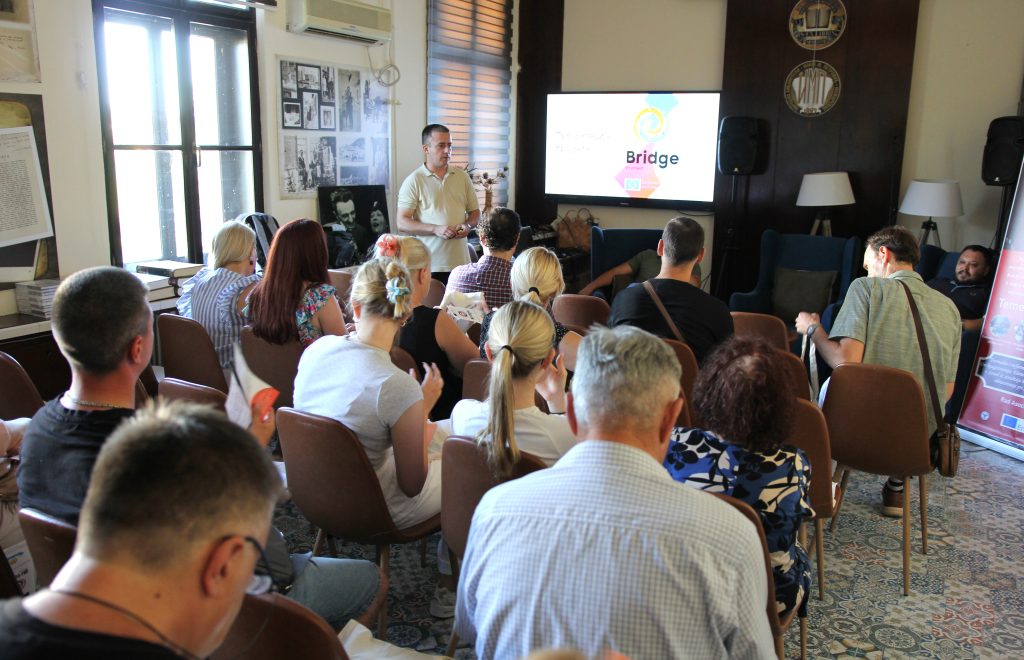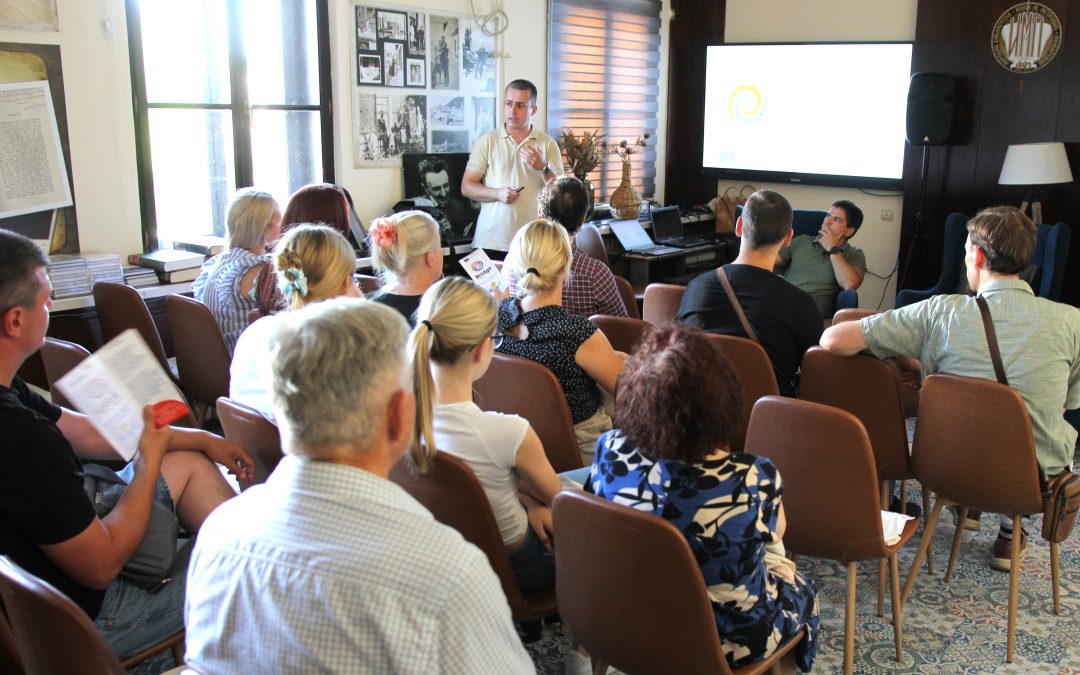
In the Ceremonial Hall of the National Library “Ilija M. Petrović” in Požarevac, yesterday at 6:00 PM, we presented the results of the BRIDGE project, the main goal of which is to shift the focus from the individual, who is at risk of dropping out of school, to the class group. We are implementing the project with partners from Italy, Spain, Greece, Romania, Slovenia and Belgium, and within the KA220 Erasmus + program, we wanted to share with our colleagues the information, impressions and experiences that we have gained in the last 3 years on this project.
At the beginning of the presentation, Petar Pantić explained the goals and target groups of the project, but also the main motive that the coordinators from Italy had when they designed it. Namely, as Petar explained, in the Italian education system, professional associates, pedagogues and psychologists, are not integrated into the system itself, and it is necessary to build special bridges between them and the students in the class. One of the reasons why our organization was chosen is that in our education there are examples of good practice when it comes to this kind of cooperation. Continuing the presentation,
Živojin Ivković spoke about Work Package 2, that is, the “Guide”, which is one of the two main products of this project, and which contains a specific methodology according to which cooperation between professional associates and teachers should take place. The “Guide” ensures the development of functional relationships and common values between actors in the educational process.
Slobodan Jotić referred to Work Package 2, which includes the “Manual” with scenarios for 68 lessons. These scenarios are divided into 9 areas (collaboration, communication, critical thinking, empathy, flexibility, development of opinions, management of learning skills, self-regulation and well-being) and cover all school subjects. In practice, this means that teachers and professional associates have a tool with which they can influence the social and emotional development of an individual in their classes.
Dušan Radovanović showed the attendees an example of piloted scenarios in the area of Management of Learning Skills, and the specific topic was Ecosystem. Through the structure of the scenario, impressions from the class and student work, Dušan explained a practical example using which an emotional support network for students is created in the classroom.
Finally, we showed the partnership structure and presented all the mobilities in the project, thereby illustrating the process of creating these tools. We hope that the “Guide” and “Handbook” will also increase the capacities of our colleagues in helping them strengthen bridges with the educational community in their professional engagement.